Tuesday, 8 September 2015

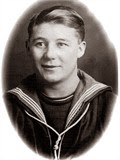
John James William Armitage (1906-41): Killed in Action during WW2

John James William Armitage was born on June 29th 1906 in Middleburg, South Africa, the third child of Robert Melton Armitage and his first wife Anne (nee Hutchinson). Robert (like his father William) was a career soldier in the Royal Artillery. He had been sent to South Africa in 1900 during the second Boer War (1899 - 1902) and remained there until he returned to the UK in 1907. By then he was a Battery Quarter Master Sergeant.

John’s mother died in 1910 at Colchester aged 34, when he was aged 4. The 1911 census shows John as a patient at a children’s hospital in Kensington. His siblings Henry (aged 11) and Ellena (6) were living at North Lodge, Kensington Palace Gardens with their grandfather William (71) and their aunt Ellen (32). John’s father Robert was listed as aged 37, a Battery Quarter Master Sergeant at Wellington Lines, Aldershot. He married Sarah Chandler in 1912, was discharged from the army later that year and went to live in Liverpool. Robert and Sarah had two children, Edward (in 1913) and Mary (1915 - 17).
Back row: Sarah Armitage (nee Chandler,  Robert's 2nd wife), John Armitage (9), Ellena Armitage (11), Front row: Edward Armitage (2) and baby Mary Armitage in 1915

The 1921 census shows John (aged 14) living at 1 Wolseley View, Burley, Leeds with his stepmother Sarah (44), sister Ellena (17) and stepbrother Edward (8). John was a "painter's improver" working for J Brodrick & Son, motor body builder, Kirkstall Road, Leeds. His father Robert was a boarder in Liverpool, presumably to allow him to continue his work as a ship superviser.  

Attestation records show that John joined the army in 1926, aged 20 in Liverpool. His trade is given as “sculptor” and he enlisted for 4 years. In 1934, John (aged 28) married Lillie Aspinall (aged 21) in Liverpool. They had a son in 1936. The family lived in Bootle, an area of North Liverpool, near the docks.
Lillie and John Armitage c 1940

John served as a Gunner in the Royal Artillery, 106 (The Lancashire Hussars) Light Anti-Aircraft Regiment in World War 2. He fought in the Battle of Greece, which began on 6 April 1941 when Germany invaded that country, which was already fighting the Italian army. The Greeks were supported by 63,000 British Empire troops (from Britain, Australia, New Zealand, Cyprus and Palestine), but the combined Allied force was soon overwhelmed by the Axis armies, who had more men, tanks and aircraft. On 21 April it was decided to evacuate the remaining British Empire forces. The Dutch troop ship Slamat was part of a convoy evacuating about 3,000 British, Australian and New Zealand soldiers from Nafplio in the Peloponnese. As the convoy headed south on the morning of 27 April, it was attacked by nine Junkers Ju 87s, damaging Slamat and setting her on fire. The destroyer HMS Diamond rescued about 600 survivors and HMS Wryneck came to her aid, but as the two destroyers headed for Souda Bay in Crete another Ju 87 attack sank them both. The total number of deaths from the three sinkings was almost 1,000. Only 27 crew from Wryneck, 20 crew from Diamond, 11 crew and eight evacuated soldiers from Slamat survived.

Army casualty records say that John, aged 35, was presumed killed in action at sea near Greece, sometime between 26 and 27 April 1941. No further details are given, but it seems very likely that John was one of those on board Slamat. His name is recorded on the Athens Memorial, which commemorates nearly 3,000 members of the British Empire land forces who lost their lives during the campaigns in Greece and Crete in 1941 and 1944-1945, in the Dodecanese Islands in 1943-1945 and in Yugoslavia in 1943-1945, and who have no known grave.


Tuesday, 22 April 2014

Bertie Pinnuck (1899-1982) and his Service in World War One

Bertie Pinnuck was a second cousin once removed of my great grandmother Ellen Pinnuck (1855-1913), who married Robert Melton Armitage (1846-1910) in 1876. Bertie was born on the 28th April 1899 in Enfield. He was the fourth of nine children born to William Frederick and Clara Pinnuck. William, a labourer, died in 1909 aged 36.

When war was declared in 1914, many men rushed to volunteer. However, as the casualty toll rose, the British Armed Services began to run out of men and so conscription was introduced in 1916. Bertie became eligible for war service in April 1917, when he reached the age of 18. The papers relating to 8,000 appeals against conscription in Middlesex have survived and are held by the National Archives. They include an application made by Clara Pinnuck for Bertie to be exempted. It was considered by a tribunal in Enfield on June 1st 1917. Bertie was then living with his mother at 21 Walton Street, Enfield and working as a “fancy portmanteau maker”. Clara provided the following reasons in support of the application:
I have had two of my sons in France one killed other one still out there and all I get is 12/6 from the Government and I am a widow with four others under 14 years and this son is my sole support and if you take him I don’t know what I shall do as he is the main stay of the house.
(The son that was killed was William George Pinnuck, who died at Ypres in 1915 aged 18. The other son was Charles Ambrose Pinnuck, born 1894, who was a Gunner in the Royal Garrison Artillery. He survived the war and died in 1940).
The tribunal granted exemption for a period of six months from June 1st 1917 on condition that Bertie paid his mother £1 per week and became an active member of a Volunteer Regiment – Domestic position.

The Chief Military Representative appealed against this decision on June 4th 1917 stating:
That in view of the urgent and pressing need for men passed for General Service in the Army, it is necessary to appeal against the decision of the Tribunal who granted him six months. His occupation is not of national importance, he was allowing his mother 17/- per week for his board and lodging until at the advice of some of the Members he allowed her 20/- per week. I submit there was no justification for the Tribunal to grant six months exemption when men are so urgently wanted and married men with heavy responsibilities have been compelled to join up.
The appeal was considered at The Guildhall, Westminster on June 20th 1917 and dismissed.

Bertie joined the Royal Navy on January 29th 1918. His service record states his occupation as carman, height 5 foot 4½ inches, hair brown, eyes hazel, complexion fresh.

Bertie in his Royal Navy uniform

Bertie was recruited as a Stoker and was initially assigned to HMS Vivid II, which was the name of the Navy Barracks at Devonport. On April 2nd 1918 he was assigned to HMS Cumberland, an armoured cruiser completed in 1903. From January 1915 until the end of the war, she escorted convoys and conducted patrols against German raiders seeking to attack merchant ships. The ship had a complement of 678 officers and men. It had a top speed of 23 knots and was powered by steam engines. Bertie’s job was to shovel coal into the boilers, which was hot and tiring work. He was demobilised on February 11th 1919. His character is recorded as very good, his ability as satisfactory.

HMS Cumberland

On April 9th 1921, Bertie married Alice Aggus at Jesus Church, Enfield. The marriage register says that he was aged 23 (he was actually not quite 22) and a farm labourer. It says that she was 24 (she was actually 27), a domestic servant, the daughter of John Aggus (deceased), a farm labourer.

Alice Pinnuck nee Aggus

The 1921 census shows Bertie (aged 23) and Alice (25) Pinnuck as boarders at The Cottage, White Webbs Farm, Enfield. This was the address of John Aggus (Alice's brother) and his wife Emily. Bertie was a woodman, working for Admiral Sir Hedworth Meux on his estate at Theobalds Park in Cheshunt, Hertfordshire.

Bertie and Alice had a daughter in 1922 and a son in 1932. Clara, Bertie’s mother, died in 1937 aged 64. The national register compiled in 1939 shows Bertie, a leather repairer, and Alice living at 7 Chase Side Place, Enfield. 


Alice died in 1967 aged 73, Bertie died in 1982 aged 82, both in Enfield.

Tuesday, 26 November 2013

The origin of the surname Armitage

A Dictionary of Surnames by Patrick Hanks and Flavia Hodges says that the surname Armitage comes from a name for someone who lived by a hermitage. Apparently, research indicates that most, if not all, Armitages can be traced back to a family living at Hermitage Bridge in Almondbury near Huddersfield, Yorkshire in the 13th century. The name is still most common in Yorkshire. My great grandfather, Robert Melton Armitage (1846-1910) was born in Leeds, which is in Yorkshire.

The name Pinnuck is not in the surname dictionary. 

Tuesday, 23 April 2013

Wedding of George Henry Armitage (1898-1936)

The photo below was taken at the wedding of George Henry Armitage (1898-1936) to Elsie Joyce Atkins (1897-1977) at Kennington Parish Church, Lambeth on August 19th 1926. George was a brother of my grandmother Emma Ivall nee Armitage.


I believe the people in the photo to be

Front row, left to right : Gertrude Ellen Bull nee Armitage (George’s sister) aged 37, George Henry Armitage aged 28, Elsie Joyce Atkins aged 29, James Atkins (Elsie’s father) aged 60, Maria Atkins (Elsie’s mother), aged 56.

Behind, left to right : unknown man, Alfred John Armitage ? (George’s brother) aged 33, George William Ivall (George’s brother-in-law) aged 45, Dorothy ? (Elsie’s sister) aged 30, William Frederick Armitage ? (George’s brother) aged 42, Louie ? (Elsie’s sister) aged 28, Emma Ivall nee Armitage (George’s sister) aged 43, Florence Edith Ivall nee Armitage (George’s sister) aged 39.

Elsie Joyce Atkins was known as Joyce. Her parents were James Atkins (1865-1937) and Maria Atkins nee Davis (1869-1948). They had three daughters, Dorothy Leslie (born 1896), Elsie Joyce (b 1897) and Louie (b 1898). In 1911, James was a commercial traveller for a paper merchant. The family were living at 106 Ivydale Road, Nunhead, Camberwell when Elsie was baptised in 1897 and James was still living there in 1937 when he died. George’s parents are not in the photo as both had died by 1926.

Friday, 21 September 2012

Stanley Thomas Armitage (1925-94), British Rail clerk

Stanley Thomas Armitage was a son of Alfred John Armitage (1893-1957) who was a brother of my grandmother Emma Armitage (1883-1970).

On 18 April 1925, Stanley was born at 102 City Rd in Holborn, the youngest of the six children (five boys and one girl) of Alfred John and Ethel Emily Armitage. The family were living at 19 Sandbrook Rd, Stoke Newington, North London in 1925. Alfred was a railway guard.

Stanley grew up in Stoke Newington before joining the RAF during the Second World War and becoming a navigator. He received a commendation whilst with them. Stanley was posted to Indonesia where he met a local woman, Mildred Rose (known as Rosie) Rodrigues (b1920). They married in 1946 in Batavia (now called Djakarta).
Rose and Stanley 

He returned to England with his wife. They lived with Stanley’s parents at 17 Sandbrook Road, Stoke Newington. The 1947 to 53 electoral registers list Alfred and Ethel, Leonard (one of Stanley’s brothers) and his wife Ivy, Stanley and his wife Rose at number 17. Stanley and Rose had moved out by 1955. In 1956 and 1958 they were living at 61 Manor Road, Stoke Newington. They had a son and two daughters. Stanley worked as a British Rail ticket office clerk. His marriage ended in divorce.

Stanley later met Barbara Violet Aldred (born Ager in 1935), who was also divorced. In 1967 they had a son, who was born at No 2 Railway Cottages, Thurrock, Essex. They were married in 1969 in Thurrock. Soon afterwards they moved to Worthing in Sussex firstly at 9 Chatham Road and then 51 Brougham Road. In 1974 Stanley and Barbara had a daughter. In 1983 the family moved to 136 King Edward Avenue in Worthing. Stanley was still working for British Rail but was now one of the most senior clerks, covering stations from Three Bridges to Portsmouth.

Stanley and Barbara Armitage

In 1984 Stanley took early retirement (aged 59) and he, Barbara and their daughter moved to Norwich. This is where Barbara came from and her mother (Violet Ager) lived. Stanley had a few jobs after retirement, working as a cashier in the local filling station and delivering new cars around the country for Trimoco (Vauxhall). He was diagnosed with emphysema in the early 90s and Stanley’s health deteriorated. He died in 1994 aged 68 at Norwich General Hospital. Stanley was cremated and his ashes are kept at Norwich Crematorium. Barbara died in 1999 aged 64.

Saturday, 15 September 2012

William Frederick Armitage (1884-1940), warehouseman

William was a younger brother of my grandmother Emma Ivall nee Armitage. I have little information on his life and would be grateful if anyone can tell me more.

William was born on 9 July 1884 in Islington, a child of Robert Melton Armitage (1846-1910) and his wife Ellen Armitage nee Pinnuck (1855-1913), who married in 1876. They had twelve children, of whom five died young. William was the third of the seven children who survived to become adults.

In 1885 the family were living at 34 Hatley Road, Islington (a modest two storey house that still exists). This is the address given in the parish record of St Anne, Poole’s Park (a nearby church which was demolished in 1965) when William was baptized on 25 Mar 1885. His father’s occupation was given as milk carrier. William’s brother’s Robert (born 1881) and sister Emma (born 1883) were baptized on the same day. The family moved to 3 Shakespeare Road, Stoke Newington in about 1888, when William was four. The 1891 census shows Robert Armitage (aged 45, a milk carrier), Ellen (35), Robert (9), Emma (7), William (6), Florence (3), Gertrude (2) and Percy (5 months) living at 3 Shakespeare Road,  Stoke Newington (in North London).

William joined the Royal Field Artillery on 3 July 1900. His attestation form shows that he stated his age to be 18 years and 3 months. His previous occupation was milkman. He was 5 feet 4½  inches tall and weighed 118 pounds. The Second Boer War had begun on 11 October 1899 and William was probably influenced by the national mood of patriotic fervour to sign up and fight for Queen and Country. There was an Armitage family tradition of service in the artillery. William’s father, his brother Robert, his uncles William and Edward and cousins Henry, Robert and John all spent time in the army. William was actually not quite 16 when he joined. It was quite common for boys who were not yet 18 to overstate their age when they joined up, although not normally by as much as William did. His true date of birth was somehow discovered and William was discharged from the army on 23 May 1901 because he had misstated his age.

Emma Armitage (William’s sister) married in 1906. I have tentatively identified William in a family photo taken at the wedding.

On December 25th 1907 William married Elizabeth Louisa Paxman at St Matthias Chruch, Stoke Newington. The marriage register shows that he was a bachelor aged 23, a warehouseman living at 70 Shakespeare Road, Stoke Newington (where his family had moved to in 1893) and that his bride was a spinster aged 26, a daughter of Harry Paxman, a labourer. Elizabeth was actually aged 30 – she was born in 1877 in Suffolk. They went on to have two children, Nellie Louisa, born in 1909 and Gladys Florence (known as Patricia) born in 1915.

The 1911 census records William, aged 26, a warehouseman in the fruit trade living at 28 Poynter Road, Bush Hill Park, Enfield with his wife Elizabeth and daughter Nellie. Electoral registers show William living at 14 Leighton Road, Enfield in 1915.

I have looked for evidence that William fought in World War One. He was aged 31 when conscription to the armed services was introduced early in 1916 and so would have been called up (unless he had a reserved occupation). The medal rolls show that several men called William Armitage fought in the army, but there is no entry for a William F Armitage. I cannot find an army record for William, although only about 40% of army records have survived. Without further information I cannot tell whether he fought in World War One or not.

Electoral registers show that William had moved to 15 Fifth Avenue, Enfield by 1918, when he is shown at this address with his wife. 

The 1921 census shows William (aged 36), Elizabeth (39), Nellie (12) and Gladys (5) Armitage living in 4 rooms at 15 Fifth Avenue. William was a warehouseman working for Graham & Co Ltd, dried and green fruit merchants, at 3 George Lane, Eastcheap. 

Electoral registers list William and his family at 15 Fifth Avenue until 1936. William’s eldest daughter Nellie married George Smith in 1931. His other daughter Gladys married James Noel Swannell in 1936.

The national register compiled in 1939 shows William, an office porter, and Elizabeth living at 48 Percival Road, Enfield.

William died in 1940 aged 56 in Edmonton (this registration district includes Enfield). His wife remarried in 1946, to Walter Simmons. She died later that year aged 68 (the death records give her age as 63).

Tuesday, 28 August 2012

Alfred George Armitage (1918-91), signalman and station master

Alfred George Armitage was a son of Alfred John Armitage (1893-1957) who was a brother of my grandmother Emma Ivall nee Armitage (1883-1970).

Alfred was born on 16 March 1918 in Brentford, the second of six children (five boys and one girl who died aged 1) born to Alfred John Armitage and his wife Ethel Emily. Their other children were Leslie John (1915-86), Leonard Frank (1920-2004), Robert Melton (1920-93), Betty M (1922-24) and Stanley Thomas (1925-94). Electoral registers show the family living at 19 Sandbrook Road, Stoke Newington (North London) in 1919 and 1925 In 1926, Alfred’s family moved to 207 Samuel Lewis Trust Buildings, Dalston Lane, Hackney. They lived at number 207 until 1934, when they moved to number 202.

In 1938, Alfred married Vivian Violet Wills. They were both aged 20. The 1939 Register shows the couple living at 5 Lansdown Drive, Hackney. Alfred had joined the London Midland and Scottish Railway in 1938 and was working as signalman when he enlisted voluntarily in the Army soon after the outbreak of World War 2 in 1939. He served in Military Transportation units at home and abroad.

It seems that Alfred and Violet's marriage had ended by 1946, as Alfred married Edith Daphne Katherine (known as Kay) Babington in Staines that year. Their first child (a son) was born 1947 in Thanet. They later moved to Watford where two more children (a son and a daughter) were born in 1949 and 51.

Alfred returned to work on the railways in 1947. After a period of training in several signal boxes he was appointed District Relief Signalman Class 1 in February 1950. A Relief Signalman would take over from the normal signalman if he was not available for work.  

On 8th October 1952 there was a major train crash at Harrow and Wealdstone Station. Alfred started work in the Harrow No 1 signal box at 6am that day. It was foggy but had begun to clear by 8am. Alfred switched the points to allow a local train travelling from Tring to Euston to stop at Harrow and Wealdstone station. At 8.19am, whilst the local train was in the station, it was struck heavily at the rear by an express train from Perth moving at 50-60 mph. The resulting wreckage spread across the tracks and was hit by another express train at 60 mph. 112 people died in the crash and 157 had injuries that required hospital treatment.

The Ministry of Transport appointed an Inspector to conduct a public inquiry to establish the reason for crash. Newspapers reported on the inquiry.
From Yorkshire Post 16 October 1952

The Inspector in his report dated 12 June 1953, stated in the conclusions
“Generally, Armitage appeared to be an able relief signalman who was thoroughly conversant with the working at Harrow, and his record is very good. I can find no evidence to show that he failed in any way to comply with the regulations in his signalling of the local and Perth trains, and the state of shock in which he was found should not be held against him. In view of his temperament, which was described as sensitive – and I had the same impression at my Inquiry – I can well understand his reaction to the disaster which had taken place under his eyes…..I consider, therefore, that he should be exonerated from all responsibility for the accident.”
The report concluded that the accident was caused by the Perth train not stopping at danger signals, as it should have done (the driver of this train was killed in the crash).

Another one of my relations, Daniel Durnford Ivall, who was Assistant Chief Officer in the Middlesex Fire Brigade, played a leading role in the rescue following the Harrow Train Crash and was awarded an OBE in 1953 for his work.

Alfred could not face working as a signalman after the crash and he became a station master at Cromford in the Peak District. His fourth child (a son) was born in 1960 at Bakewell, Derbyshire. Alfred later became a station master at Harlington near Luton.

Reorganisation within BR led to the abolition of station masters at local stations. Around this time Alfred left the railway and became a pub landlord at the Red Lion in Dunstable. He later became a school caretaker. He died 1991 in Luton aged 73.